

Introduction
Welcome to part one of our introductory series. Alternative investments have transformed from exclusive institutional vehicles to accessible opportunities for everyday investors. Understanding what sets these assets apart is the first step toward building a more diversified portfolio.
Total alternative assets under management were $4.1 trillion in 2015. Today they are approaching $10 trillion and expected to reach $18 trillion by 2027, continuing to grow at around 12% per year. This expansion reflects a fundamental shift in how both institutional and retail investors approach portfolio construction.
What Are Alternative Investments?
Alternative investments (also called alternative assets or simply "alternatives") are a category of financial investments that fall outside traditional strategies such as stocks, bonds, and cash. Due to their non-public nature, they are often referred to as "private investments." They include:
Private Equity: Direct investments in private companies, buyouts, and growth capital Venture Capital: Funding for early-stage startups with high growth potential Real Estate: Property investments including commercial, residential, and development projects Private Credit: Direct lending and debt investments outside traditional banking Real Assets: Infrastructure, farmland, timber, and natural resources Collectibles: Art, wine, classic cars, and other tangible assets
While these asset classes vary significantly in structure, they share common characteristics: they are usually less liquid in nature and exhibit low correlation to standard asset classes.
Because private markets are notoriously opaque compared to public markets—private companies are under no obligation to reveal earnings or report to shareholders—information can be hard to find. For niche asset classes like art, critical information sits with a relatively small group of experts. For these reasons, alternative assets are often invested in and managed by specialists with deep expertise, who take an active role in growing the value of their holdings. As a retail investor, you need to pay close attention to the legitimacy and expertise of your investment providers.

The Case for Alternatives
Financial institutions and professional investors have long realised the benefits of adding alternative investments to their portfolios. Institutional investors allocate approximately 30–50% of their portfolios to alternatives. The ultra-wealthy allocate 10–20%. The Yale Endowment, pioneered by the late David Swensen, famously allocated over 70% to alternative investments, delivering superior long-term returns.
Average retail investors, by contrast, allocate just 2–5% to alternatives. This gap represents both a challenge and an opportunity.
Diversification
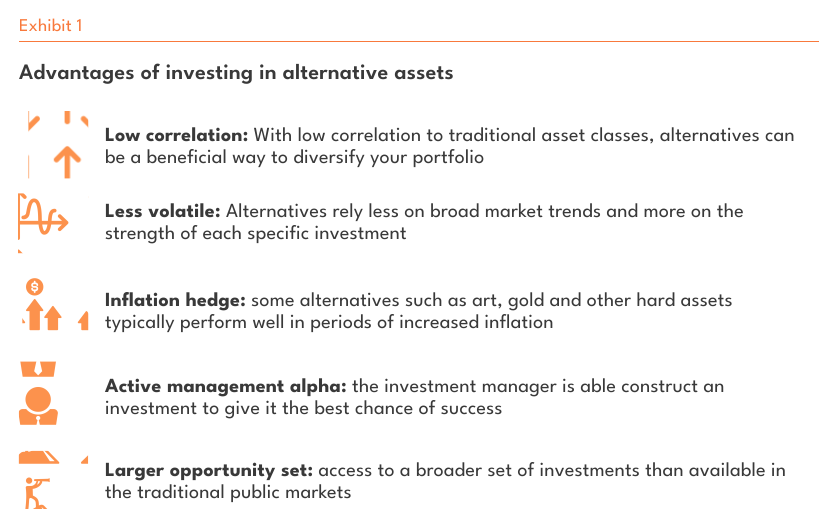
The main advantage of adding alternatives to a portfolio is the diversification they bring. Common financial theory suggests that the most effective strategy to lower risk is by spreading one's investments across a wide range of assets.
Compared to stocks and ETFs, alternative investments offer even better diversification properties due to their nature of being fundamentally different to standard asset classes. They are less likely to move in lockstep with common investments, offering a greater ability to reduce downside risk. The 2022 market saw both stocks and bonds decline simultaneously—a stark reminder that traditional diversification has limitations.
Additional Advantages
- **Lower volatility**: Alternatives rely less on broad market trends and more on the strength of each specific investment
- **Inflation hedge**: Assets like art, gold, real estate, and other hard assets typically perform well in periods of increased inflation
- **Active management alpha**: Investment managers can construct and shape investments to maximise their chance of success
- **Larger opportunity set**: Access to a broader set of investments than available in traditional public markets
Beyond portfolio benefits, investing in alternative assets is also an enjoyable and educational experience. Real assets such as real estate, wine, or art are tangible, and providers often send frequent updates about how your assets are performing.
Building a Winning Portfolio
The "60/40" Portfolio Is Dead
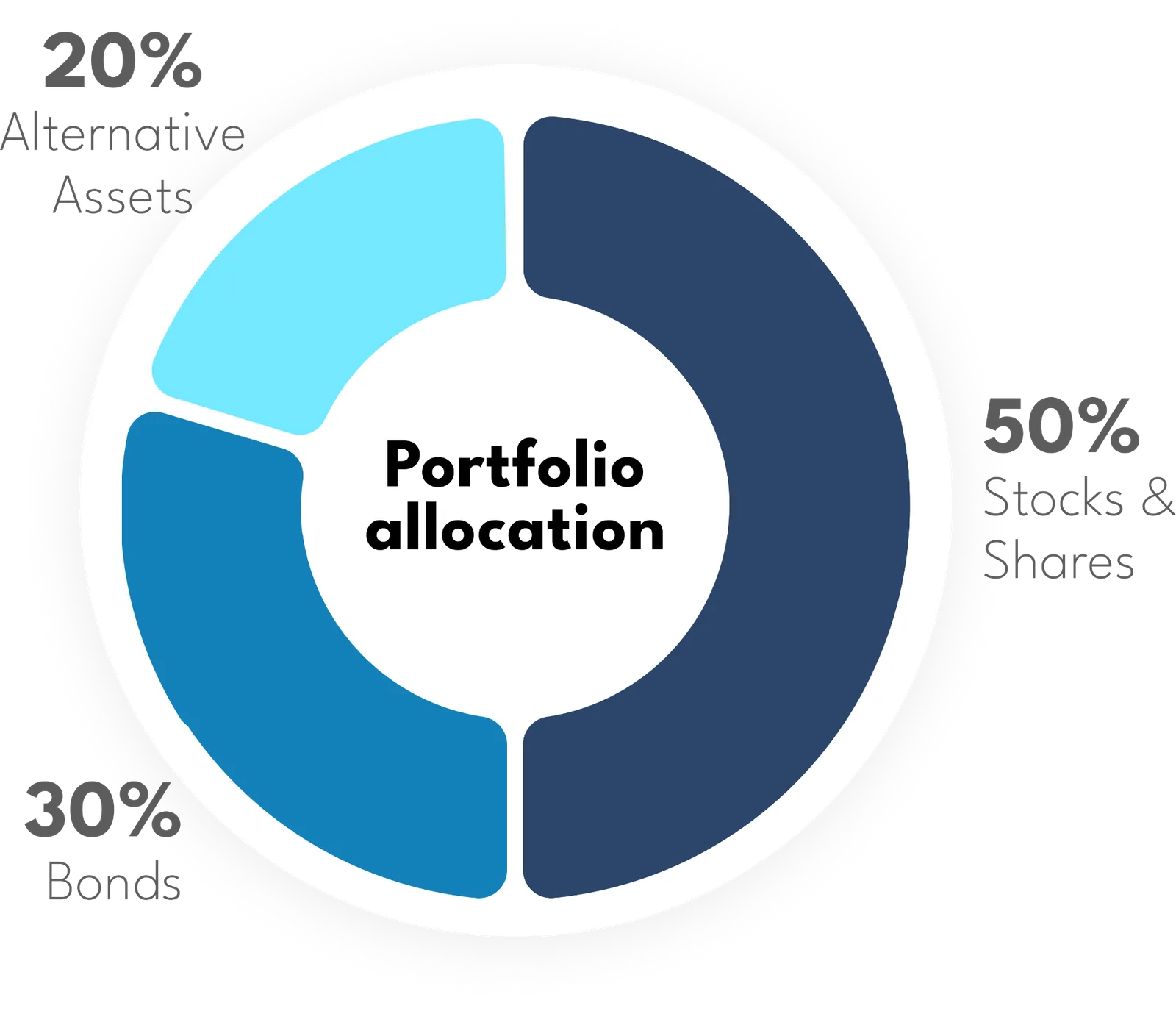
A traditional "60/40" allocation to equities and bonds may no longer be enough to meet long-term investment goals. Alternatives can help lower volatility, enhance returns, and broaden diversification.
How Much to Allocate
While alternative assets are attractive, it is not recommended to allocate the entirety or even a majority of your portfolio to the asset class. Even institutional investors with very deep pockets don't usually fill more than 50% of their portfolios with private market investments. Because of the illiquidity and "chunkiness" of alternatives, most private individuals invest 5–20% of their portfolio—a reasonable range for most people. The optimal level depends on individual circumstances, investment objectives, and attitudes towards risk.
Diversify Within Alternatives
In addition to diversifying a portfolio with alternatives, it is important to diversify within the alternatives space. Best-performing strategies usually comprise allocations to more than one of the main alternative asset classes: private equity, venture capital, real estate, and collectibles. As some providers require minimum investments, investors with lower investable wealth might find it more difficult to achieve desired diversification—ready-made diversified products can help in this instance.
A Long-Term Mindset
Alternatives should not be viewed as a "get rich quick" type of investment. Most have long investment terms, meaning cash is locked up for multiple years. Some investments offer higher returns, but return levels are usually reflective of investment risk. A balanced approach towards maturities and risk can help investors build a winning portfolio.
Thanks to the increased accessibility of alternative assets, you can now diversify your own investment portfolio just as a financial institution would.
The Democratisation of Access
Historically, alternative investments required substantial capital commitments—often £250,000 or more—placing them beyond reach for most investors. The landscape has shifted dramatically:
- Investment platforms now offer access from as little as £10
- Regulatory frameworks have evolved to enable broader participation
- Technology has reduced operational barriers and costs
- Secondary markets have improved liquidity options
The combination of innovative fund structures, digital distribution models, and regulatory changes means that eligible retail investors today have a wide range of alternative investment products available to them.

Getting Started with Other.
Other. exists to close the gap between institutional-quality alternative investments and everyday investors. Our platform provides:
Education: Comprehensive resources to build your understanding of each asset class Discovery: Curated directory of vetted investment platforms and opportunities Analysis: Tools and frameworks to evaluate opportunities Community: Connection with like-minded investors navigating private markets
Whether you're curious about private equity, interested in real estate, or exploring venture capital, we provide the knowledge and access to make informed decisions.
The journey into alternative investments begins with education. As you explore our Learning Hub, you'll develop the frameworks needed to evaluate opportunities, understand risks, and build a diversified alternative portfolio aligned with your goals.