
Introduction to Art Investing
Art has served as a store of value for centuries, decorating the walls of the wealthy while quietly appreciating. Today, art investing has evolved from aristocratic hobby to a more accessible asset class, with sophisticated investment vehicles broadening participation beyond the ultra-wealthy.
The global art market was valued at an estimated $57.5 billion in 2024—a 12% decline from 2023's post-pandemic highs according to the Art Basel & UBS Global Art Market Report 2025. The contraction was largely driven by softness at the very high end, while the mid-market showed resilience. Despite the cyclical dip, the long-term trajectory remains robust: art has delivered approximately 7.5% annual returns over the past two decades, competitive with many financial assets while offering unique diversification benefits.
As an asset class, fine art is regarded by the ultra-wealthy as a consistently strong performer. According to Deloitte, 85% of wealth managers recommend including art in a balanced investment portfolio. The interplay between financial and emotional value makes it a desirable "passion investment"—providing intellectual stimulation, personal wellbeing, and a deep connection to culture alongside potential financial returns.
Art as an Asset Class
Investment Characteristics
Low Correlation: Art prices show minimal correlation with traditional financial assets, providing genuine diversification benefits. During the pandemic, contemporary art outperformed standard asset classes like real estate and commodities by a significant margin, according to Citi.
Inflation Hedge: Tangible assets historically preserve purchasing power during inflationary periods. Art investments have proven to show a high level of value preservation even in times of high inflation.
Emotional Return: Beyond financial returns, art provides aesthetic enjoyment—a "dividend" unique to this asset class. Owning art provides intellectual stimulation, and being able to display one's investment at home enhances personal wellbeing and quality of life.
Portability: Unlike real estate, art can be moved across borders, offering geographic flexibility. Put in the right storage, it is easy and relatively inexpensive to maintain.
Market Segments
Old Masters: Pre-1800 European paintings. Established market with limited supply but concentrated collector base.
Impressionist & Modern: Late 19th–early 20th century. The most liquid segment with consistent institutional demand.
Post-War & Contemporary: 1945 to present. Fastest growth but highest volatility and speculation risk.
Emerging Artists: Living artists building recognition. High risk/reward with significant selection challenges. Less well-known artists often offer a more affordable entry point and larger value upside but are more speculative in nature.
Photography & Digital Art: Growing segments with evolving market dynamics, including NFT-adjacent works though NFT hype has subsided since 2022.
Historical Performance
The Artprice 100 index (blue-chip artists) has returned approximately 7.5% annually over 25 years, outperforming bonds but trailing equities. However, survivorship bias affects these figures—many artworks decline in value or become unsellable. The Knight Frank Luxury Investment Index reported 29% annual growth for art investment items in 2022, though this moderated in subsequent years.
Understanding Art Valuation
What Determines the Value of an Art Piece?
Several factors determine whether an art piece appreciates in value: favourable press coverage, curator endorsement, social media growth, features in public or private collections, and exhibitions or art fairs. The combination of these advantageous factors can lead to a so-called "Halo effect" around an artist and their work.
Artist Reputation: Career trajectory, institutional recognition, exhibition history, and critical reception fundamentally drive value. Famous artists such as Banksy and Andy Warhol catapulted art further into the mainstream.
Provenance: Ownership history matters enormously. Works from prestigious collections command premiums.
Authenticity: Clear documentation and attribution are essential. Disputed works face significant discounts or become unsellable.
Condition: Restoration, damage, and conservation needs affect value. Original condition commands premiums.
Rarity: Scarcity within an artist's oeuvre. Unique works or limited editions command higher prices than abundant production.
Subject Matter: Certain subjects and periods within an artist's work trade at premiums—Monet's water lilies versus lesser-known subjects, for example.
Size & Medium: Generally, larger works command higher prices, though practical considerations create upper limits. Paintings typically command higher prices than works on paper.
Price Discovery
Unlike liquid securities, art prices are discovered through: - Auction sales (public, transparent)—Christie's and Sotheby's dominate - Private dealer transactions (opaque) - Gallery sales (list prices, negotiable)
The lack of continuous pricing makes valuation inherently imprecise. Appraisals are estimates, not guarantees.
Art Market Dynamics
Market Structure
Auction Houses: Christie's and Sotheby's dominate the high end, with Phillips and regional houses serving different segments. Public sales provide price transparency. Andy Warhol's "Shot Sage Blue Marilyn" sold for $195 million at Christie's in May 2022—the most expensive American artwork ever auctioned.
Dealers/Galleries: Primary market (new works) and secondary market (resales). Relationships matter; access to desirable works often requires established connections.
Art Fairs: Basel, Frieze, TEFAF concentrate buyers and sellers. Art Basel has attracted bigger and bigger audiences, pushing Art further into mainstream consciousness.
Online Platforms: Digital sales grew significantly post-pandemic but have since stabilised. Artsy, 1stDibs, and Artnet facilitate transactions and market intelligence.
Buyer Composition
An increasingly uneven distribution of wealth has benefitted the Art market, with new price records achieved regularly as billionaires compete for the most exclusive pieces. Buyer categories include:
- Ultra-high-net-worth collectors (personal passion, status, legacy)
- Institutional buyers (museums, corporate collections)
- Investment funds (purely financial motivation)
- A growing group of younger collectors discovering art as an accessible alternative asset
Market Cycles (Updated 2025)
The art market is cyclical, closely tied to wealth creation and economic confidence:
- **2007–2009**: 40%+ decline during financial crisis
- **2010–2014**: Recovery and new price records
- **2018–2022**: Contemporary boom, record prices, NFT surge and retreat
- **2023**: Market correction began; 4% decline in global sales
- **2024**: Decline deepened to 12%, with global sales at $57.5 billion. High-end lots saw the sharpest drops, while mid-market ($50K–$500K) proved more resilient
- **2025**: Stabilisation underway; fractional platforms tilting toward the middle market
The contemporary segment shows highest volatility; blue-chip Impressionist and Modern works demonstrate more stability.
How to Invest in Art
Direct Acquisition
The simplest way of investing in art is to go to an art fair or gallery and purchase a piece. Speaking to curators and artists themselves can help to understand the market and find a suitable work. Building the necessary expertise can be time-consuming, so this strategy is best for prospective art lovers or people who value the emotional side of ownership alongside financial returns.
The buying process usually involves hiring a professional appraiser to determine quality and value, and organising appropriate storage, insurance, and maintenance.
Minimum Viable Entry: £5,000–10,000 for emerging artists; £50,000+ for established names.
Art Investment Advisors (UK)
For people who want to save time, several advisories and online art investment companies are available. Some galleries or advisors (e.g., Maddox Gallery, Yield Gallery, S&P Gallery) will manage all aspects of a client's art investment journey—from expert advice to acquisition strategy, portfolio management, maintenance, storage, and sale. These providers usually take a percentage of profits earned or charge a management fee. As they provide support in buying art rather than managing regulated financial instruments, they are not regulated by the FCA.
Art Funds
Pooled vehicles investing in art portfolios: - Diversification across artists and periods - Professional management and expertise - Limited liquidity (7–10 year fund lives) - High minimums (£100,000+) for traditional funds
Fractional Ownership Platforms
Fractional ownership has been one of the most significant innovations in art investing. Platforms buy blue-chip art, fractionalise it (either using a corporate vehicle or blockchain-based tokenisation), and sell individual fractions to investors. In this way, investors can participate in multi-million acquisitions at a low minimum investment amount.
The most prominent platform, US-based Masterworks, paused new offerings in 2024 amid market softening, but the fractional model continues to evolve. In 2025, platforms are pivoting toward the more resilient mid-market segment ($50K–$500K works), and UK-accessible options remain limited.
While fractionalised platforms are a great option especially for novice investors, the downside is that investors don't physically own the art piece and miss out on the pleasure of displaying it.
Art-Secured Lending
Loans secured by art collections allow owners to access liquidity without selling. Lenders include Sotheby's Financial Services and specialist banks, typically at 50% loan-to-value ratios.
Practical Considerations
Costs and Fees
Buyer's Premium: 20–25% at auction, added to hammer price Seller's Commission: 5–15% at auction, negotiable for valuable works Gallery Commission: 40–50% to gallery on primary sales Insurance: 0.1–0.3% annually of value Storage: Climate-controlled storage costs vary significantly Conservation: Periodic maintenance and restoration
Authentication and Due Diligence
Catalogue Raisonné: The definitive record of an artist's works Authentication Boards: Some artists have official authentication bodies Provenance Research: Verify ownership history, particularly 1933–1945 Condition Reports: Independent assessment before purchase
Tax Considerations (UK)
Capital Gains Tax: Art subject to 20–28% CGT, though "wasting chattels" exemption applies to items with useful life under 50 years Inheritance Tax: Potentially included in estate; Conditional Exemption for important works Import VAT: 5% on imports for non-EU works Business Asset: Careful structuring may enable reliefs
Liquidity Challenges
Selling art requires finding the right buyer, timing the market, and ensuring proper condition and authentication. Expect 6–18 months for significant sales; emergency sales crystallise discounts.
Art investments are risky and most pieces need to be held over several years before they can be sold at a profit. Every artwork is unique, making it difficult to predict how value will develop, especially with emerging artists.
Is Art Right for You?
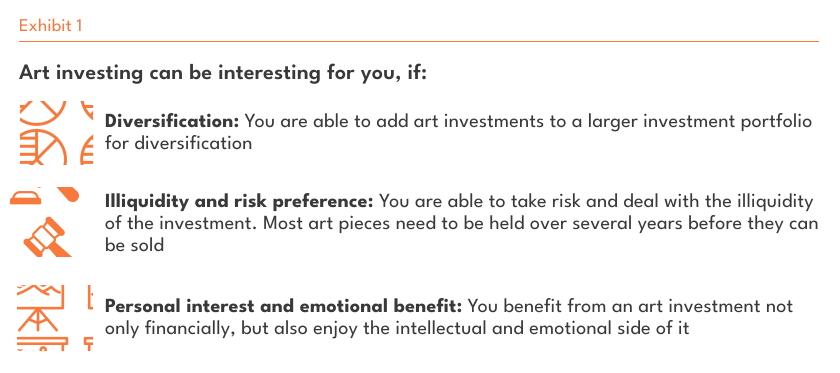
Art Can Be Interesting for You If:
- You are able to add art investments to a larger portfolio for diversification
- You can take risk and deal with the illiquidity of the investment—art pieces typically need to be held for several years
- You benefit from an art investment not only financially, but also enjoy the intellectual and emotional side of it
Key Risks
Illiquidity: Art cannot be quickly converted to cash at fair value Subjectivity: Tastes change; today's acclaimed artist may be tomorrow's forgotten name Authenticity: Forgery and misattribution remain significant risks Condition: Physical damage can devastate value Costs: Transaction costs, storage, and insurance erode returns Market Cycles: Sharp downturns possible during economic stress—the 2024 market decline demonstrates this clearly
Recommendations
Develop Expertise: Specialise in areas you understand and enjoy Buy Quality: Better to own fewer, finer works than many lesser pieces Diversify: Across periods, artists, and media Long Horizon: Expect 10+ year holding periods Enjoy It: If you love it, you'll accept market fluctuations more easily Professional Advice: Engage advisors for significant purchases Documentation: Maintain thorough records of provenance, condition, and transactions
Suggested Allocation
Art typically represents 1–5% of very high-net-worth portfolios. For most investors, fractional platforms or art funds offer more practical exposure than direct acquisition. The emotional returns from living with beautiful objects add a dimension impossible to quantify—but ensure financial considerations remain realistic.