
Introduction to Wine Investing
Fine wine is known among investors as a stable and resilient asset class that not only provides pleasure amongst connoisseurs, but also offers consistent financial returns. Still a relatively niche asset class, wine investments have gained popularity over recent years.
Over the last 30 years, wine has outperformed several traditional asset classes with a compound annual growth rate of approximately 10%. The Liv-ex 1000 index has delivered annualised returns of around 13.6% over the past 15 years. With low correlation to equities and bonds, wine offers genuine diversification benefits.
In difficult market environments such as the 2008 financial crisis or the coronavirus pandemic, wine values remained relatively constant while other asset classes were severely affected. Wine also acts as a good inflation hedge. However, after peaking in 2022, the fine wine market experienced a correction through 2023–2025, with prices moving closer to credible clearing levels and liquidity beginning to return—a pattern that suggests stabilisation heading into 2026.
Wine as an Investment Asset
Investment Characteristics
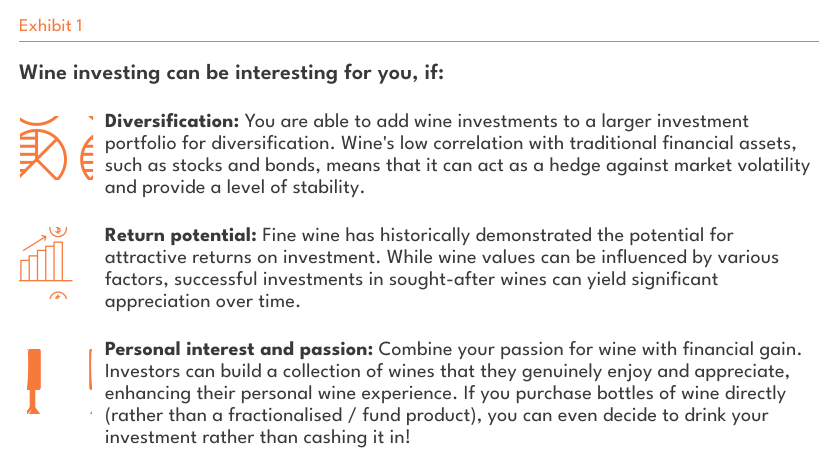
Finite Supply: Each vintage is produced once; consumption steadily reduces availability. Climate change is making the production of excellent wines even more difficult, further constraining supply and driving up prices.
Improving Quality: Fine wines evolve and improve in bottle for decades. The appreciation is often not linear but rather exponential, which increases the probability of long-term returns.
Consumable Asset: Ultimate exit is consumption—creates a natural demand floor unique among alternative assets.
Low Correlation: Wine prices move independently of financial markets, making it a genuine portfolio diversifier.
Tangible Asset: Physical ownership with storage considerations, but also emotional value as a "passion investment".
Market Structure
Bordeaux: Historic heart of investment-grade wine. First Growths (Lafite, Latour, Margaux, Mouton, Haut-Brion) and Super Seconds dominate trading. According to fine wine platform Vin-X, the most valuable wines are predominantly European, with Lafite Rothschild among the most expensive.
Burgundy: Rising prominence, particularly Grand Cru producers. Smaller production creates scarcity premiums but liquidity challenges. Burgundy showed relative resilience during the 2023–2025 correction.
Champagne: Premium cuvées from top houses gaining investor interest.
Italy: Super Tuscans and premium Piedmont (Barolo, Barbaresco) attract growing attention.
California/Rest of World: Cult wines (Screaming Eagle, Penfolds Grange) trade actively but remain smaller markets.
Performance Metrics
The Liv-ex indices track fine wine prices: - Liv-ex Fine Wine 100: Top 100 wines, heavily Bordeaux-weighted - Liv-ex 1000: Broader index across regions - Sub-indices: Bordeaux, Burgundy, Champagne, Italy tracking
The Liv-ex 1000 closed 2025 slightly negative overall, but showed positive signals in the final months—suggesting a potential turning point after two years of correction.
Understanding Wine Quality and Value
What Makes Wine Investment-Grade
Producer Reputation: Established estates with decades of quality and market demand Vintage Quality: Weather variations create vintage differences; exceptional years command premiums Critic Scores: Robert Parker, Wine Spectator, and other critics influence prices significantly Aging Potential: Minimum 10–20 year aging curve for investment consideration Rarity: Production levels matter; smaller production creates scarcity Provenance: Storage history critically affects quality and value
Will the Value of Wine Keep Increasing?
Wine experts predict that prices in the fine wine segment will continue to rise, driven by several factors. First, wine—when stored correctly—tends to get more expensive the longer it ages. Second, global demand continues to grow, for both consumption and investment. Distinguished vintages become more desirable, fuelling prices. Third, supply is limited: every vintage is constrained by geographic conditions, weather, and production methods. Climate change is making excellent vintages scarcer still.
The Bordeaux Classification
The 1855 Classification remains relevant for Bordeaux:
First Growths (Premiers Crus): - Château Lafite Rothschild - Château Latour - Château Margaux - Château Mouton Rothschild (elevated 1973) - Château Haut-Brion
Super Seconds: High-quality châteaux often trading near First Growth prices (Léoville Las Cases, Pichon Lalande, etc.)
Vintage Considerations
Exceptional Bordeaux vintages command significant premiums: - 2000: Millennium vintage, celebrated quality - 2005: Classical structure, aging beautifully - 2009 & 2010: Back-to-back outstanding vintages - 2016: Considered exceptional, long aging potential - 2018, 2019, 2020: Recent trio of excellent vintages
Off-vintages trade at significant discounts but may represent value opportunities for consumption rather than investment.

Storage and Provenance
Critical Importance of Storage
Wine is perishable. Poor storage destroys value. Unlike traditional investments, wine bottles need to be preserved and managed in an optimal way to avoid loss of value. Wine storage requires a cool location with good ventilation and low humidity, protected from light and vibration. The wine portfolio then needs to be managed to make sure aging is tracked and a wine is not stored past its peak.
Temperature: Constant 12–14°C essential; fluctuations cause damage Humidity: 65–75% prevents cork drying Light: UV exposure degrades wine; dark storage required Vibration: Minimal disturbance for optimal aging Position: Horizontal storage keeps corks moist
Professional Storage Options
Bonded Warehouses: - Duty and VAT suspended until removal - Temperature and humidity controlled - Insurance included - Costs: £8–15 per case per year - Major facilities: London City Bond, Octavian, Vinotheque
Private Wine Cellars: - Climate-controlled home storage - No storage costs but significant capital investment - Insurance and security considerations - Provenance questions for resale
Provenance Documentation
Buyers pay premiums for impeccable provenance: - Original purchase receipts - Storage history documentation - Temperature records - Chain of custody
Wine without clear provenance trades at significant discounts or becomes unsellable.
Condition Assessment
- **Fill Level**: Should be appropriate for age
- **Label Condition**: Damage affects value
- **Capsule Integrity**: Signs of leakage concerning
- **Case Condition**: Original wooden cases preferred
How to Invest in Wine
Direct Acquisition
Being a pleasure investment, wine should be bought for both emotional and financial value. At a smaller scale, purchasing wine for both consumption and investment is the best strategy, as proper storage will be costly and may outweigh any financial gain in the beginning. A wine portfolio can be built alongside taste preferences and expertise, with bottles appreciating in value as they age.
- Source from merchants, auctions, or en primeur
- Arrange professional storage
- Track inventory and values
- Plan exits (auction, merchant, private sale)
Minimum Viable Portfolio: £10,000–25,000 for meaningful diversification across vintages and producers.
En Primeur (Wine Futures)
Buying wine before bottling, typically Bordeaux: - Historically lower prices than post-release - 18–24 month wait for delivery - Vintage and producer selection critical - Recent campaigns (2022–2024) proved controversial on pricing relative to secondary market values
Wine Investment Platforms (UK)
For people who want to invest in wine but don't want to deal with the burden of selection, storage, and management, 360-degree providers can help manage the entire investment journey. Previously, these services were only offered to high-net-worth investors, yet new digital wine merchants and investment platforms have opened this type of investment to smaller-scale investors:
- **Cult Wines**: Full-service platform from £10,000, employing seasoned experts for purchase, storage, and sale
- **Vinovest**: Algorithm-driven portfolios from £1,000
- **Oeno Group**: Managed portfolios, institutional approach
- **Wine Owners**: Cellar management and investment
These providers usually import wines into specialised bonded storage facilities (often shielding UK import taxes), track aging, and facilitate the sale process. Clients fully own their wine bottles and can request access for consumption.
Fractionalised Wine Investment
Similar to art investments, online marketplaces offering fractionalised or tokenised wine investments have emerged. The advantage is access to fine wine bottles that would otherwise be prohibitively expensive. Data from wine auctions shows that the most expensive bottles have increased more significantly in value, allowing fractional investors to participate in that growth. The disadvantage is that no investor fully owns the bottle or has access to consume it, and these products may be subject to regulatory restrictions.
Trading Platforms
For active traders: - Liv-ex: The global marketplace for fine wine trading - BBX (Berry Bros): Merchant trading platform - Auction houses for individual bottles/cases
Note: buying wine either for personal storage or via a third-party provider are non-regulated activities and investments can be made by anyone having reached the legal drinking age.
Building a Wine Portfolio
Diversification Principles
Across Regions: - Core Bordeaux holdings (50–60%) - Burgundy exposure (20–30%) - Italy, Champagne, New World (10–20%)
Across Vintages: - Mix of mature wines (10–15 years) for nearer-term value realisation - Young vintages (3–5 years) for growth potential - Avoid concentration in single vintage
Across Producers: - Blue-chip First Growths for stability - Super Seconds for value potential - Emerging stars for growth upside
Portfolio Sizing
Entry Level (£10,000–25,000): - 5–10 cases diversified - Focus on liquid Bordeaux - Professional storage essential
Intermediate (£25,000–100,000): - 20–40 cases across regions - Include Burgundy and Italy - Consider platform/managed approach
Serious Collector (£100,000+): - 50+ cases diversified portfolio - Direct merchant relationships - En primeur participation - Consider fund allocations
Exit Strategy
Plan your exit before buying: - Auction: Public sale, 10–15% seller's commission - Merchant buyback: Lower prices but faster - Private sale: Better prices, requires buyer network - Consumption: The most enjoyable exit
Is Wine Right for You?
Wine Can Be Interesting for You If:
- You are able to hold investments over a long period of time
- You have access to good storage to preserve value
- You have great knowledge of the wine market or are willing to work with an expert provider
Key Risks
Storage Risk: Improper storage destroys value completely. Wine bottles don't appreciate indefinitely—they reach a peak at which they should be sold or consumed. Authenticity: Counterfeiting exists, particularly older vintages and rare bottles Illiquidity: Selling can take months; forced sales attract discounts Fashion Risk: Tastes change; regions fall in and out of favour. Values can be strongly influenced by individual opinions and subjective tastes (e.g., wine critics) Climate Change: Vintage variation increasing; long-term quality implications Currency: Euro-denominated market creates FX exposure for UK investors
Costs to Consider
- Storage: £8–15 per case annually
- Insurance: 0.5–1% of value annually
- Transaction costs: 10–15% buyer/seller commissions
- Management fees: 1–2% for platform/fund
- Duty and VAT on removal from bond
Tax Considerations (UK)
Capital Gains: Wine classified as "wasting chattel" (life under 50 years) and typically CGT exempt IHT: May be included in estate depending on ownership structure Duty/VAT: Payable on removal from bonded storage
Recommendations
Start with Quality: Better to own less of the best than more of the mediocre Storage is Non-Negotiable: Only professional storage maintains investment-grade provenance Diversify: Across vintages, regions, and producers Long Horizon: Expect 5–10 year holding periods Enjoy Learning: Develop palate and knowledge alongside portfolio Track Everything: Maintain meticulous records of purchases, storage, and values
Fine wine combines investment returns with the pleasure of connoisseurship. For those who appreciate both the financial and sensory dimensions, it offers a uniquely rewarding alternative asset class.